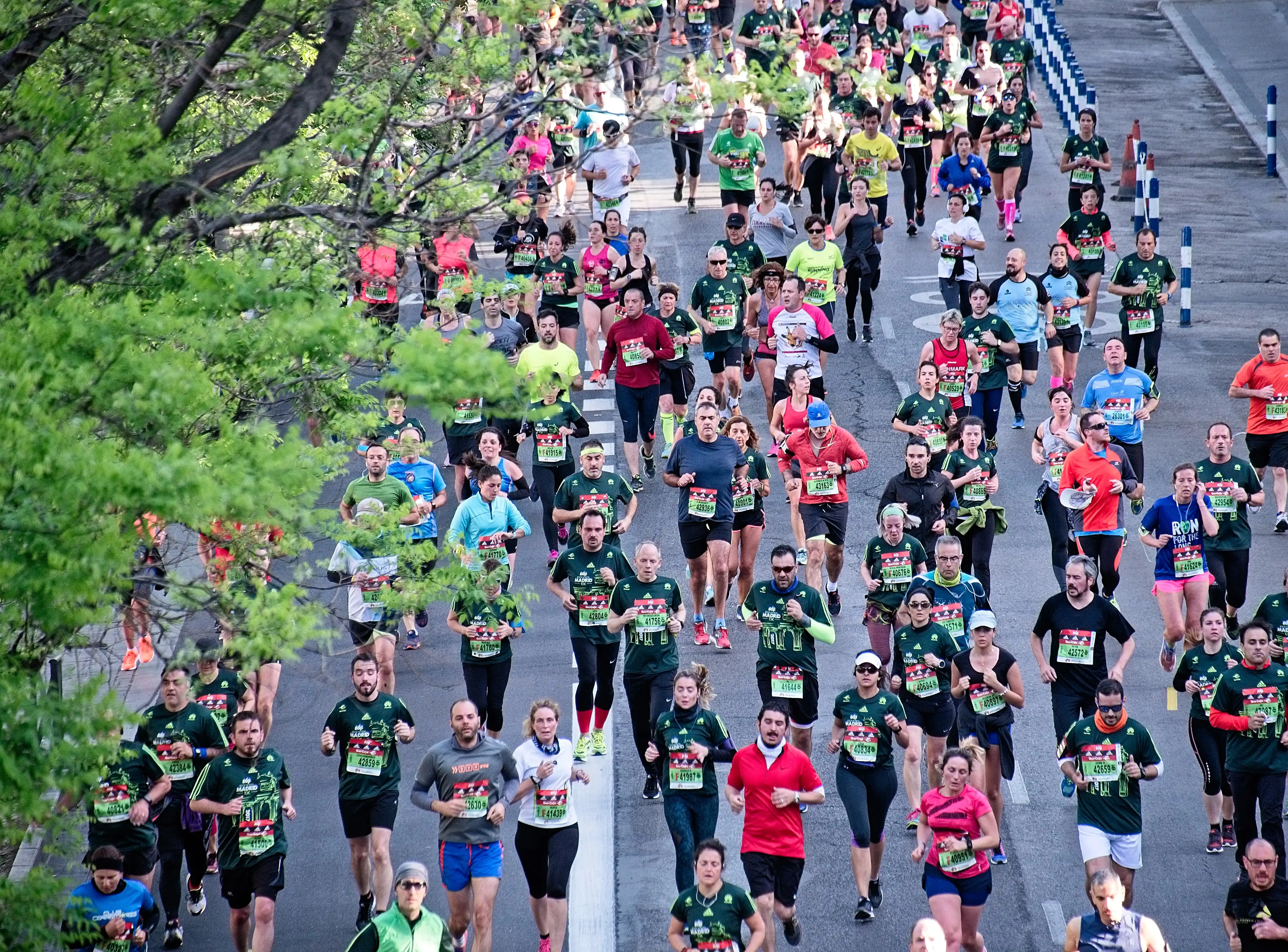
The ‘New York City Marathon’ is one of the world’s largest and most influential mass‑participation marathons. Although numerous studies have examined performance trends, participation patterns, pacing behavior, environmental influences, and physiological aspects of runners in this event, no review has synthesized the evidence specific to this race. This study aimed to systematically summarize the scientific literature on the ‘New York City Marathon’. A systematic search of Scopus, PubMed, Web of Science, Embase, and Cochrane was conducted using terms related to the ‘New York City Marathon’ to identify studies published up to February 2026. Eligible studies included runners of all ages, sexes, and performance levels, with no restrictions on publication date, topic, or study design. Extracted data included: (1) authors; (2) publication year; (3) study design; (4) sample characteristics; (5) variables assessed; and (6) main findings. Results were synthesized narratively by domain. Seventy‑six publications met the inclusion criteria. Participation increased markedly over time, driven primarily by growth among women and age‑group runners. While elite and competitive age‑group performances improved in recent decades, mean finish times across the entire field increased by ~40 min since the 1970s, reflecting the democratization of marathon running. Ethiopian runners were the youngest and fastest. Peak performance occurred at 29.7 years in women and 34.8 years in men (1‑year age intervals), and in the 30–34 and 35–39 age groups, respectively (5‑year intervals). Approximately 10 % of runners experienced major injuries during training or the race that prevented starting or finishing. Higher training volumes increased injury risk, with foot, knee, and hip injuries most common, whereas adequate preparation reduced risk. Environmental conditions—particularly temperature—had a stronger influence on race times than course metrics. Performance declined with increasing temperature, especially among slower runners and among men aged 30–64 and women aged 40–64. Runners generally adopted a positive pacing strategy with a final spurt in the last segment (40–42.2 km). The fastest split occurred between 5–10 km and the slowest between 35–40 km, coinciding with the undulating terrain entering Central Park. Older athletes paced more evenly than younger athletes. Men showed a larger decrease in running speed from the fastest to the slowest splits than women (21.1 % vs. 16.7 %). Slower runners exhibited greater early‑race deceleration but larger late‑race speed increases, whereas faster runners maintained the most even pacing. Participation in the ‘New York City Marathon’ has grown substantially, driven by increased involvement of women and age‑group runners. Although elite performance has improved, overall mean finish times have slowed due to broader participation. Ethiopian runners were the youngest and fastest, with peak performance occurring in the early to mid‑30s. Injury prevalence was considerable, particularly with higher training volumes, though adequate preparation mitigated risk. Higher temperatures slowed performance, especially among slower runners. Pacing was predominantly positive, with older athletes pacing more evenly and faster runners showing the smallest performance decline. Future research should explore cardiovascular monitoring technologies—including real‑time ECG streaming during the race—and assess the impact of innovations such as carbon‑plated “supershoes” on performance and pacing.